.png)
Corporate Event Catering Ideas That Go Beyond the Boxed Lunch
Ask someone to describe the catering at the last corporate event they attended, and you will likely get one of two responses. Either they cannot remember it at all, or they remember it for the wrong reasons. A lukewarm sandwich tray. A buffet line that moved at a crawl. A generic salad that nobody touched.
Corporate event catering has a reputation problem — and it is mostly self-inflicted. Not because good options do not exist, but because the default choice is so deeply ingrained that most planners reach for it without thinking twice. The boxed lunch gets ordered. The hotel buffet gets booked. The food shows up, serves its functional purpose, and disappears without leaving any impression whatsoever.
Here is the thing: it does not have to work that way. And the events where catering is actually done well are not necessarily more expensive or more complicated to pull off. They just require a little more intention — and a willingness to think beyond the default.
Why Corporate Event Catering Deserves More Thought Than It Gets
Food is one of the most talked-about elements of any event. Not always in the moment, but afterward — in the debrief, in the group chat, in the casual conversation on the way back to the office. Guests remember when the food was exceptional, and they remember when it was not.
For corporate events especially, catering is a direct reflection of how much the host values the people in the room. A thoughtfully curated menu with quality ingredients and a memorable presentation communicates something. So does a tray of pre-made sandwiches dropped off thirty minutes before the event starts.
The good news is that the gap between forgettable and genuinely impressive corporate event catering is smaller than most people assume. It is less about budget and more about approach.

Make It Visual — Food That Creates a Moment
One of the clearest shifts in corporate event catering over the past several years is the move toward food that is worth looking at. Not in a precious or over-styled way, but in the sense that the presentation itself becomes part of the guest experience.
A wood-fired pizza oven on-site does not just produce great pizza. It produces theater. Guests gravitate toward it. They watch the process, they smell the food being prepared, they talk to the person making it. The food becomes an anchor point for the event rather than a logistical necessity tucked into the corner.
The same principle applies to beautifully presented appetizers, thoughtfully designed food stations, and anything that gives guests a reason to stop, look, and engage before they even take a bite.

Ditch the Buffet Line — Think Food Trucks and Food Stations
The traditional buffet line solves one problem — feeding a lot of people — while creating several others. It concentrates guests in one area, creates bottlenecks, and produces a passive experience where everyone ends up with the same plate whether they wanted it or not.
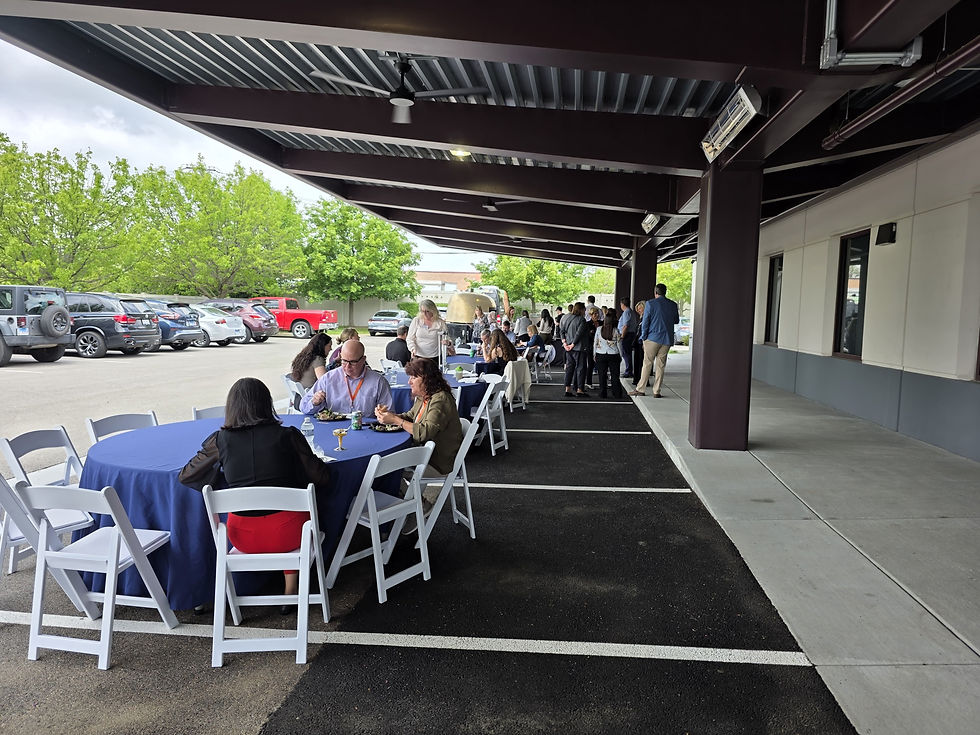
Food trucks and food stations solve this differently. Instead of funneling guests through a single line, they distribute the energy of the event across multiple points of engagement. Guests move, mingle, and make choices. The event feels alive rather than managed.
For corporate events with diverse guest lists, multiple food options also mean diverse dietary needs get handled naturally rather than as an afterthought. One truck might focus on wood-fired pizza. Another might offer something lighter. Guests self-select based on what they actually want, and nobody ends up with a plate they did not choose.
Elevate the Details — Appetizers, Presentation, and the Finishing Touches
The details of a corporate catering spread communicate quality before a single bite is taken. How food is displayed, what vessels it is served in, whether garnishes are intentional or an afterthought — all of it registers with guests on some level, even if they cannot articulate exactly why one event felt more polished than another.
Passed appetizers and small bites set the tone during the arrival and mingling portion of an event, when guests are forming their first impressions and the energy of the room is still establishing itself. A beautifully arranged caprese skewer with fresh mozzarella, heirloom tomatoes, basil, and a balsamic drizzle is not a complicated thing to produce — but it photographs well, it tastes like something, and it signals that the host paid attention.
Themed food presentations that connect to the event's purpose, the season, or the company's identity add another layer of intentionality that guests notice and appreciate.
Don't Forget the Beverage Experience
Beverages are the most consistently underplanned element of corporate event catering. Most events treat them as infrastructure — something that needs to exist so guests are not thirsty — rather than as an experience in their own right.
The difference between a standard drink station and a genuine beverage experience is not enormous in practice, but it is significant in how it lands with guests. A mobile espresso bar at a morning event does not just provide coffee. It creates a gathering point, it signals hospitality, and it gives guests something to hold and enjoy while they are networking and getting settled.
For afternoon and evening events, a mobile bar with signature cocktails or a curated wine and beer selection elevates the atmosphere in a way that a cooler of canned beverages simply does not. A custom cocktail named for the company, the event theme, or the occasion is a small touch that consistently earns comments and creates a memorable detail guests carry home with them.
Non-alcoholic specialty options — boba, fresh-squeezed lemonade, specialty iced tea — are equally worth considering, particularly for events with mixed guest profiles or daytime schedules where a full bar would feel out of place.
The Case for One Vendor Who Handles It All
Here is where most corporate event catering plans start to unravel: the coordination.
Booking a food truck is straightforward. Booking a food truck, a separate bar service, a staffing team, a rental company for tables and linens, and a setup crew — and then managing all of those vendors against a single event timeline — is a different proposition entirely. One vendor runs late. Another shows up without the right equipment. The person coordinating everything spends the day on their phone instead of at their own event.
The strongest argument for working with a full-service corporate event catering partner is not any single service they offer. It is the fact that everything is coordinated through one point of contact. The food, the beverages, the staffing, the rentals, the setup and cleanup — all of it is handled cohesively, with one team accountable for the outcome.
That coordination shows up in the guest experience in ways that are hard to quantify but easy to feel. The event runs smoothly. The details are consistent. The host gets to be a host rather than a logistics manager.

Better Catering Is Closer Than You Think
Corporate event catering does not require a reinvention. It requires a shift in approach — from checking a box to making a choice. From ordering the default to asking what would actually make an impression on the people in the room.
The events that get talked about, remembered, and repeated are not always the most elaborate. They are the ones where someone clearly gave thought to the guest experience — and where the food reflected that.
If you are planning a corporate event and want catering that does more than feed the room, we would love to help you build something worth remembering.
Request a Quote or Explore Our Corporate Event Catering Services to get started.


